

The 5th Congress “Days of the Spiritual Heritage of Marian Shrines – Sinj 2026”, April 16–18, 2026
 Roko Pavlinušić
 The Blessed Virgin Mary – a guiding star of our life, a monument of inspiring faith!
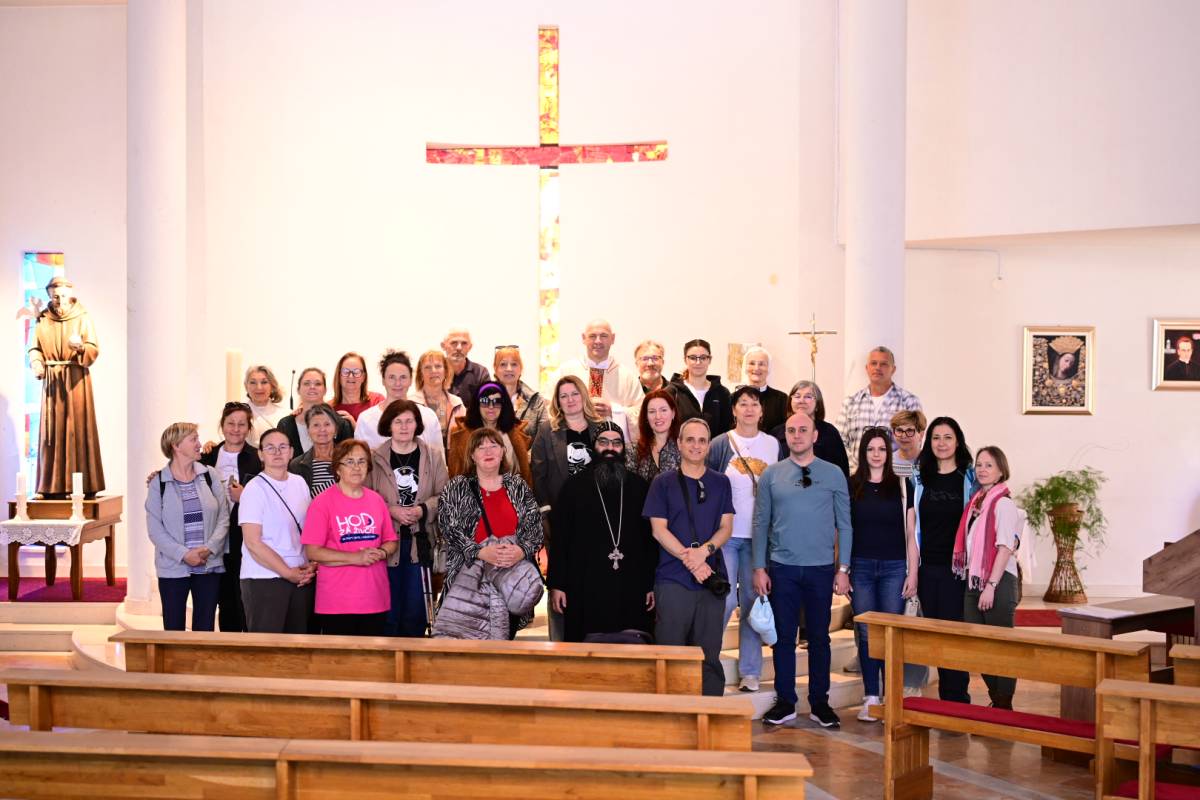
The 5th Congress “Days of the Spiritual Heritage of Marian Shrines” brought together priests, theologians, ethnologists, anthropologists, archaeologists, and cultural and tourism workers to share their experiences and insights on the importance of Marian shrines in preserving and promoting spiritual heritage, and to reflect on their coexistence with religious tourism.
The three-day Congress offered inspirational lectures and presentations of Marian shrines from Croatia, Bosnia and Herzegovina, North Macedonia, Egypt, and Israel. It also included a round table, holy masses, visits to Sinj’s museums, the presentation of the book “The Mother's Word”, a concert, a pilgrimage along the Path of Our Lady of Sinj, and a visit to Solin.
The Congress aimed to deepen our understanding of the veneration of the Blessed Virgin Mary, thus setting a powerful reminder of the strength and beauty of Our Lady's grace and her presence in the lives of the faithful. It began on April 16 with a Holy Mass in the Basilica of Our Lady of Sinj. On April 17, renowned experts delivered lectures on the importance of preserving the spirituality of Marian shrines, the complexity of scientifically valorizing and conserving existing sacral heritage, research on important historical events, the worship of the Mother of God across traditions, and the promotion and presentation of sacral heritage for the development and protection of local identities and cultures. The Congress was thus a place for exchanging experiences, sharing and acquiring new knowledge, and inter-cultural and inter-religious dialogue.
After introductory speeches by Monika Vrgoč, Director of the Sinj Tourist Board; Miro Bulj, Mayor of Sinj; Blaženko Boban, Prefect of Split-Dalmatia County, Don Ivan Bodrožić, Dean of the Catholic Faculty of Theology in Split, and Friar Jozo Grbeša, Provincial Superior of the Franciscan Province of Herzegovina (via video message), attendees were addressed by Friar Marinko Vukman, Guardian of the Shrine and Rector of the Basilica of Our Lady of Sinj, who then led a prayer for the success of the Congress.
The program, moderated by Assoc. Prof. Friar Domagoj Runje and Professor Branimir Romac, started with the lecture of Professor Don Ivan Bodrozic, PhD, on “The Veneration of Virgin Mary in Ephesus”. He discussed the Council of Ephesus (431 AD) and how its theological conclusions directed the Church towards intensively venerating Mary, thereby indirectly influencing church architecture and art. The lecture also touched on the final years of Our Lady on Earth, and the place of her death and ascension. Vinicije B. Lupis then presented on “The Cult of Armenian Madonnas in Constantinople and Bulgaria” and “The Armenian Church in Lebanon”, exploring the fusion of styles through cross-confessional artistic production, while considering the emergence of peripheral art of Christian peoples under Ottoman rule.
Afterwards, Friar Markos Alorshalemy Ne Edvard Marey Shehata Hanna, representing the Coptic Church of Egypt, presented on “The Blessed Virgin Mary in the Coptic Church”, focusing on the flight to Egypt and recorded Marian apparitions. Then came the lecture by Professor Viktor Nedeski, PhD, from the Orthodox Faculty of Theology “St. Clement of Ohrid” – Ss. Cyril and Methodius University from Skopje (North Macedonia) on “St. Mary Peribleptos in Ohrid – a Marian Shrine of the Eastern Christian Tradition”. This lecture covered the historical development, theological significance, and cultural importance of St. Mary Peribleptos, contextualizing her with the Eastern Christian Marian tradition and European cultural heritage.
Ron Peled, Director of the Ramla Museum and the City Department of Tourism, a licensed tourist guide and doctoral student at the University of Haifa (Israel), talked about the early Christian Marian shrines in Israel – specifically, their locations, traditions, religious significance, and influence in shaping Christian memory and the worship of Mary in Jerusalem. Then Father Zvonimir Pavičić, Parish Priest of Međugorje (B&H), spoke on “The Queen of Peace, Međugorje, a Place of Virgin Mary’s Grace”, highlighting its importance for pilgrims and as a place of prayers, confessions, and recorded Marian apparitions.
As we this year marks the 800th anniversary of the passing of St. Francis, Friar Zoran Kutleša, Guardian of the Franciscan Monastery of St. Francis in Imotski, talked about the “Franciscan Monastery of St. Francis” and the veneration of Our Lady of the Angels. Juraj Belaj, PhD, from the Institute of Archaeology in Zagreb, presented the archeological research on the Templar Church of the Assumption of the Blessed Virgin Mary in the village of Gora on Banovina built by Templar French masters atop an older Romanesque church. In 2012, it was proclaimed the Marian Shrine of the Diocese of Sisak by the decree of Bishop Monsignor Vlado Košić and was recently rebuilt after the 2020 earthquake.
Anita Librenjak, archaeologist and art historian at the Museum of the Cetina Region in Sinj, presented on “The Artistic Heritage of the Sacral Area of the Basilica of Our Lady of Sinj – A Harmony of Impressions and Contrasts”. In it, she related the Basilica’s historical architectural and artistic layers with contemporary artistic achievements of the 20th and 21st centuries which have brought in the modern expression and spatial dynamics within the earlier baroque cultural heritage.
These lectures were followed by a round table prepared by the leader of the MARIKULT project (funded by NextGeneration EU), Professor Valerija Kovač, PhD, and her project associate, Assist. Prof. Mirela Hrovatin, PhD. The topic of the round table, “Pilgrim and/or tourist: perspectives of visitors to Marian shrines”, saw contributions from Ron Peled, Friar Domagoj Runje, Valerija Kovač, Mirela Hrovatin (moderator), Friar Zoran Kutleša, Friar Markos Alorshalemy Ne Edvard Marey Shehta Hanna, and Monika Vrgoč.
In the afternoon, participants were taken through collection of the Franciscan Monastery by Friar Gabrijel Hrvatin Jurišić, and the Museum of the Alka of Sinj by Friar Domagoj Runje and its curator, Tomislav Barhanović.
The Holy Mass at the Basilica of Our Lady of Sinj was led by Friar Bojan Rizvan of the Parish of the Sacred Heart of Jesus in Zadar, alongside Friar Marinko Vukman and Friar Andrija Bilokapić, the Vicar of the aforementioned Parish, with musical accompaniment from the Folk Singers of the Catholic Faculty of Theology.
Then followed the presentation of Friar Andrija Bilokapić’s book, “The Mother's Word” by Friar Jozo Grbeš, Provinicial Superior of the Franciscan Province of Herzegovina; Friar Bojan Rizvan, the book’s editor; and Vedran Vidović, its publisher and the second program moderator alongside Friar Marinko Vukman. Friar Bojan opined on the book: It witnesses a living faith and memory, with the Shrine of Our Lady of Sinj at its center as enduring proof and eternal symbol of inspiring faith. Through this Shrine and their closeness to Our Lady, the region’s people learned to accept the presence of God throughout their lives and transform it into prayer, vows, and gratitude. It is, therefore, unsurprising and significant that this evening, within the Congress “Days of the Spiritual Heritage of Marian Shrines”, we not only present the book of our Friar Andrija Bilokapić entitled “The Mother’s Word”, but also the spirituality of the Blessed Virgin Mary. The book presents Mary as brave and fearless; she is not a superficial manifestation of our piety, but rather a guiding star of our life. There, true Marian worship is rooted in the Gospel and brings us back to the Our Lord. This book invites us to take and open it, let it into our lives, allowing it to become a prayer that brings together the holiness of this place and the devotion of the people of this region. The author, Friar Andrija, stressed that he, in the presence of Our Lady, is akin to both a playful and a silent child, ever looking to his mother for answers to his questions.
Next came a concert of the Folk Singers of the Catholic Faculty of Theology from the University of Zagreb, directed by Maestro Joško Ćaleta, with exceptional pieces dedicated to the worship of the Blessed Virgin Mary.
The final day of the Congress (Saturday, April 18) began with the pilgrimage from Sinj to Čitluk and the Church of St. Francis. Friar Marinko Vukman blessed the pilgrims who were then led by Friar Domagoj Runje along the Path of Our Lady of Sinj from her Basilica in Sinj to Čitluk, where they visited the “Maiden’s Cemetery” previously mentioned by Friar Runje. The pilgrims were welcomed at the Church of St. Francis by Friar Mate Matić, listened to a lecture by historian Professor Stjepan Marković on the archaeological sites of Aequum and Čitluk, and attended a Holy Mass led by Friar Domagoj Runje.
Commemorating the anniversary of the deaths of Queen Jelena and the coronation of King Dmitar Zvonimir, the Congress participants, led by Mario Matijević, Director of the Public Cultural Institution Zvonimir – Solin, then visited the ancient Shrine of Our Lady of the Island, the Basilica of the Holy Family, the Church of St. Peter and Moses (known as the “Hollow Church”), and the archeological site of Manastirine.
The success of the 5th Congress “Days of the Spiritual Heritage of Marian Shrines” is the result of dedication and commitment from many individuals and institutions, demonstrating what can be achieved through collaboration, the interchange of knowledge and experience, and community-inspired effort. We wholeheartedly thank: the Shrine of Our Lady of Sinj, its Guardian, Friar Marinko Vukman, and Priest Friar Antonio Mravak; the Catholic Faculty of Theology in Split and its Dean, Don Ivan Bodrožić; Split-Dalmatia County, its Prefect, Blaženko Boban, and Ana Glaurdić Mekinić; the Tourist Board of Split-Dalmatia County and its Director, Ivana Vladović; the Town of Sinj, its Mayor, Miro Bulj and his Deputy Mayor, Denis Bobeta; Friar Gabrijel Hrvatin Jurišić, the editor of the Kačić Annals; Friar Mate Matić, Parish Vicar at Karakašićca, Suhač; Friar Jozo Grbeša, Provincial Superior of the Franciscan Province of Herzegovina; Vedran Vidović, Director of the Informative Center “Mir” in Međugorje; Friar Andrija Bilokapić, Vicar of the Parish of the Sacred heart of Jesus in Zadar; Friar Domagoj Runje; Nun M. Gracijana Gracin; the Alka Knights Association, its President, Stipe Jukić, its Secretary, Ivan Nasić, and its administrative staff; Joško Jagnjić and Ivica Ćosić, employees of the Cultural-artistic Center Sinj; Boris Filipović Grčić and Tomislav Barhanović, the director and custos, respectively, of the Museum of the Alka of Sinj; Alka Knight, Mirko Vučković and Alka Squire, Mirk Malbaša; Lino Ursić; Ivana Vrdoljak; Nastja Logar; Branimir Romac; Ivan Vitić; Maestro Joško Čaleta and the Folk Singers of the Catholic Faculty of Theology; the headmasters, teachers, and students of the Franciscan Classical Gymnasium and Vocational School, Ban Josip Jelačić Vocational High School, Ruđer Bošković Technical-industrial School, and Dinko Šimunović Gymnasium in Sinj; members of the Cultura-artistic Association Cetina, the Association for the Preservation of the Cetina Region, and Traditional Association Bitelić; staff of the Tourist Information Center, the Monastery, and the Museum of the Alka of Sinj; the Croatian Radio, Radio Peace, Radio Split, Radio Osijek, Hit Radio, and the Croatian Catholic Radio; the news portals “Ferata”, “Sinjska rera”, “Dalmacija danas”, “Dalmatinski portal”, “AS media”; television channels “Laudato”, “TV Jadran”, and “HRT – Studio Split”; the “Informative Catholic Agency – IKA”; “Slobodna Dalmacija”; the Public Cultural Institution Zvonimir – Solin and its Director, Mario Matijević; the Croatian National Tourist Board and the Tourist Board of Solin; as well as all other participants, photographers, cameramen, performers, technicians, caterers, tradesmen, transportation staff, and all those who contributed to success of this Congress.
FB Photo Gallery 1
FB Photo Gallery 2
Roko Pavlinušić